The clusters page
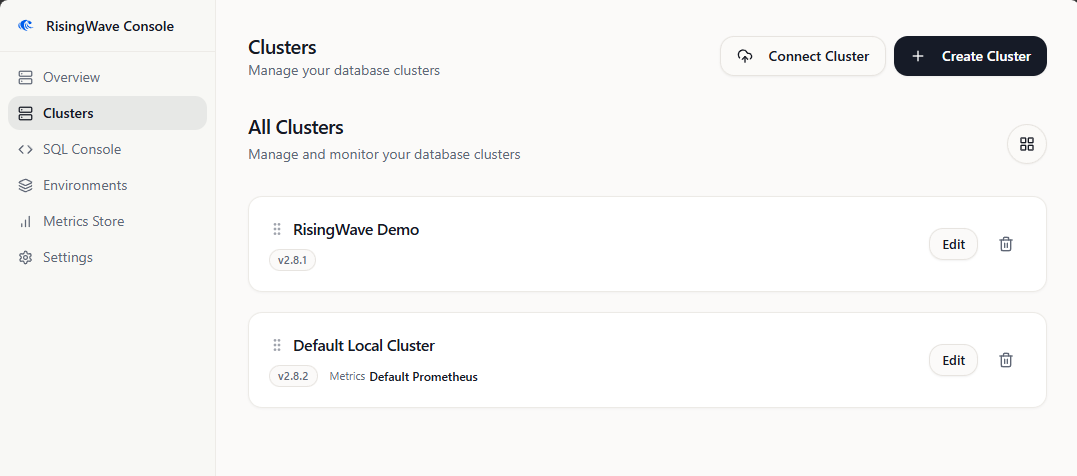
- Imported clusters: existing RisingWave clusters registered with Console. Deleting the record only removes it from Console.
- Managed clusters: Kubernetes clusters created by Console inside an environment. Console can update their component specs, image tags, and database license key because it owns the RisingWave custom resource.
The cluster details page
This page provides an in-depth view and operational tools for the selected RisingWave cluster.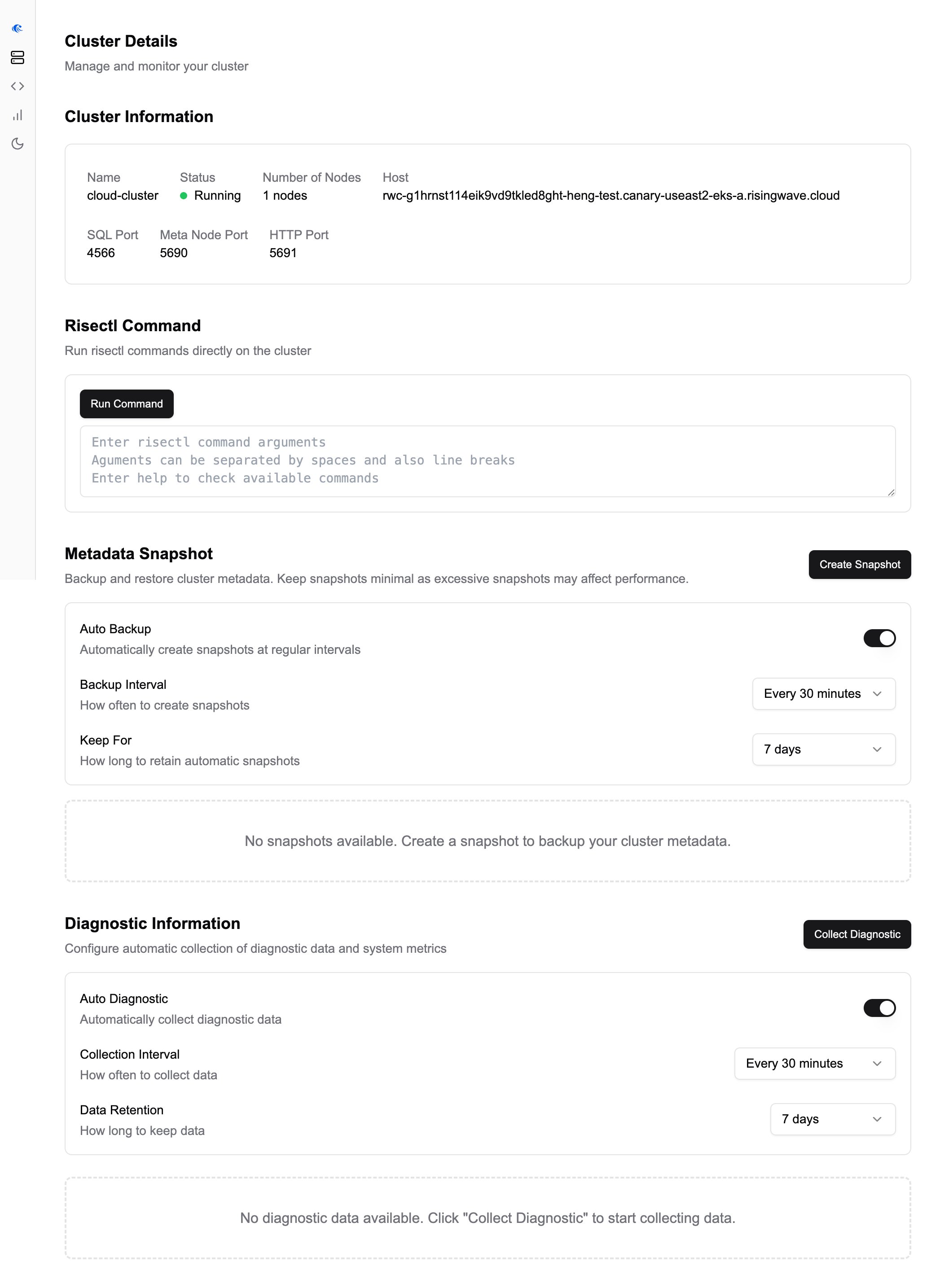
Cluster information panel
This section displays a summary of the cluster’s connection information and its reported status, including: Name, Status, Number of Nodes, Host, and configured ports (SQL, Meta Node, HTTP).Executing risectl commands
RisingWave Console provides an interface to run risectl (RisingWave’s command-line control utility) commands directly on the selected cluster.
- How to use: In the Risectl Command section, enter the arguments for your
risectlcommand (for example,meta-node list) into the text area and click Run Command. The baserisectlcommand is implied. - Output: The command’s output is displayed within the UI.
- Purpose: Useful for various administrative and diagnostic tasks supported by
risectl. - Note on
RCONSOLE_RISECTLDIR: Console stores or readsrisectlbinaries from this directory. In air-gapped deployments, mount the requiredrisectlversions in advance or use an air-gap Console image that includes them.
Updating managed cluster license keys
For managed clusters, Console can update or clear the RisingWave database license key. This is the same signed license key used for Console enterprise access. The key is stored in a Kubernetes Secret and referenced by the RisingWave custom resource. Use this when a managed database cluster needs access to RisingWave premium features or when a license is renewed. For the full configuration details for Console startup and managed RisingWave clusters, see Manage license keys.Managing metadata snapshots
RisingWave Console facilitates the management of RisingWave cluster metadata snapshots, which are important for backup and recovery.- Manual snapshots: The Create Snapshot button in the Metadata Snapshot section triggers snapshot creation on the RisingWave cluster.
- Automated backups:
- You can enable Auto Backup and configure the Backup Interval (for example, “Every 30 minutes”) and how long snapshots are Keep For (for example, “7 days”).
- Viewing snapshots: The UI indicates if snapshots are available. (Note: RisingWave Console helps create these snapshots. The restoration process typically follows standard RisingWave procedures.)
Collecting diagnostic information
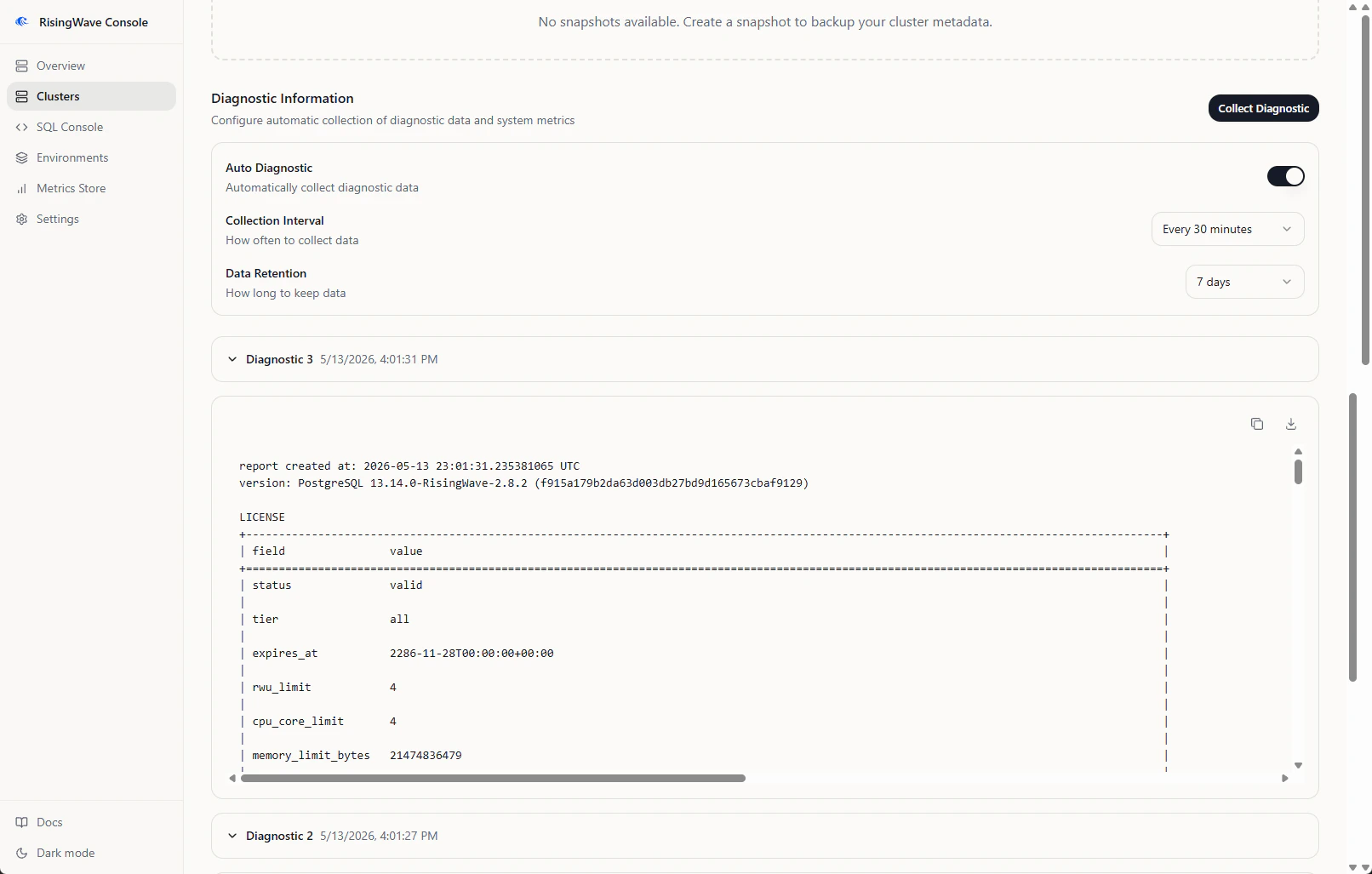
For advanced troubleshooting, RisingWave Console can assist in collecting diagnostic data from your RisingWave cluster.- Manual collection: Use the Collect Diagnostic button in the Diagnostic Information section.
- Automated collection:
- Enable Auto Diagnostic and configure the Collection Interval and Data Retention period.
- Accessing data: The UI shows diagnostic collection status and available diagnostic data.