

Open SQL Editor
- Go to the RisingWave Cloud dashboard.
- Open the cluster you want to work with.
- In the cluster navigation, click SQL Editor.
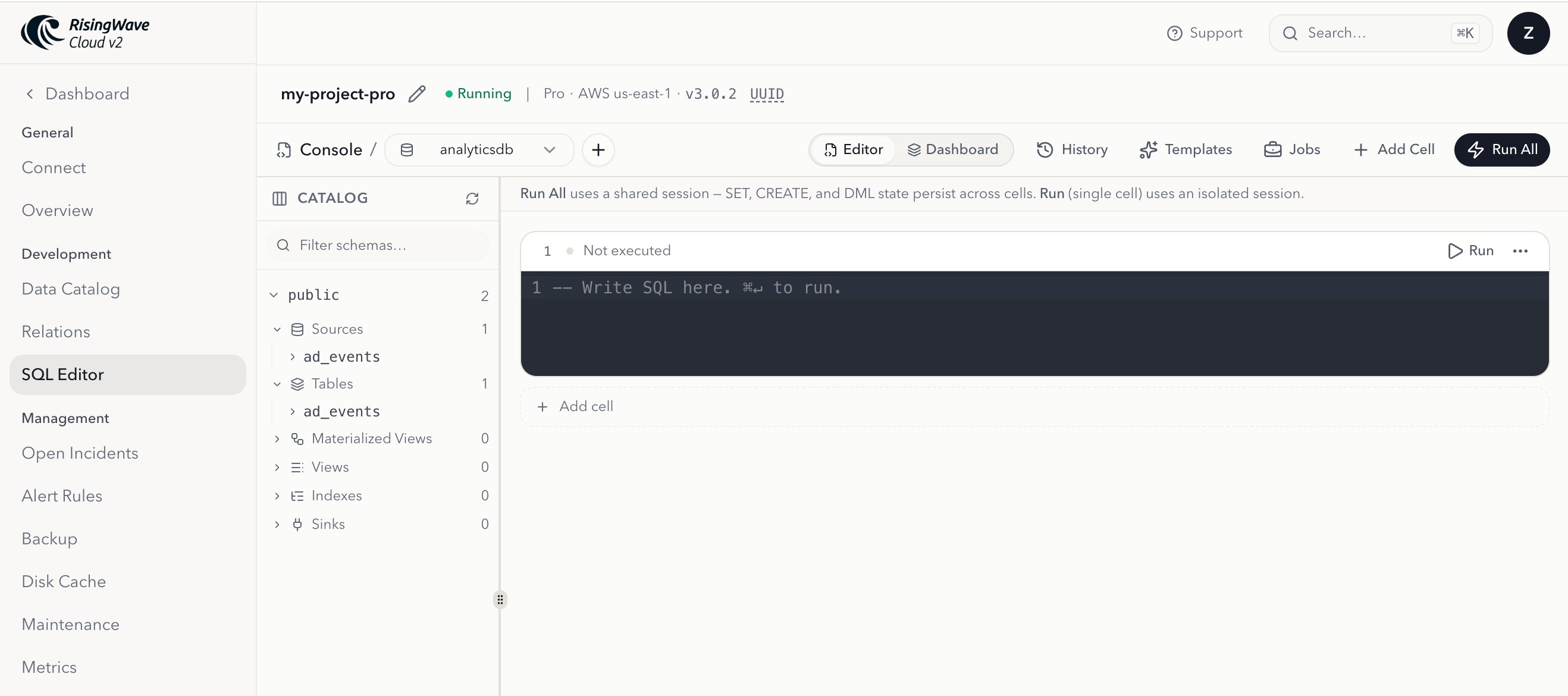
Sections
Catalog sidebar
The catalog sidebar helps you browse databases, schemas, tables, sources, materialized views, views, indexes, and sinks in the cluster. To inspect an object in more detail, use Data Catalog from the cluster navigation.Notebook cells
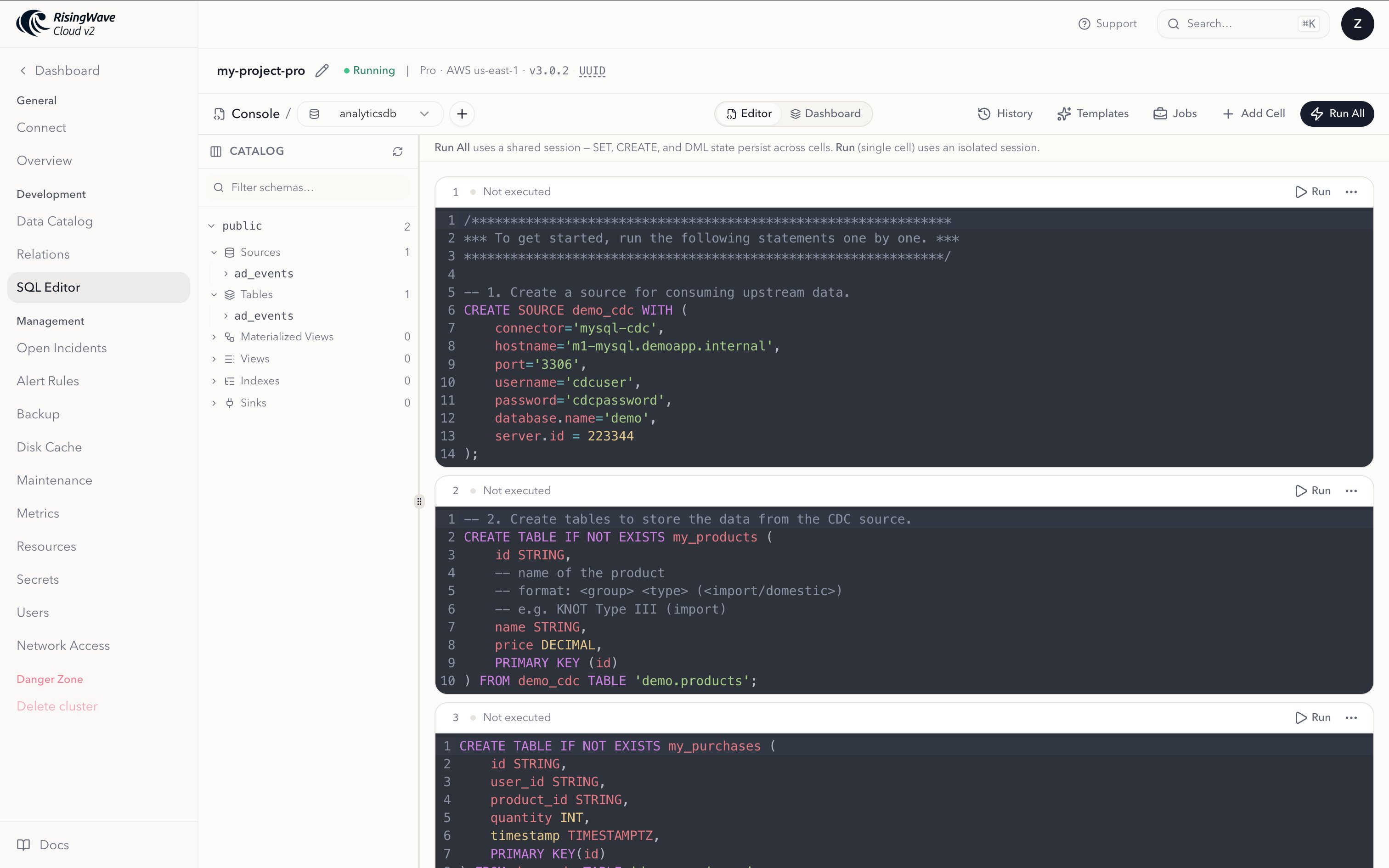
The SQL Editor uses cells. Each cell can contain one SQL statement or a small SQL script.- Click Run on a cell to execute only that cell.
- Click Run All to execute all runnable cells in order.
- Click Add cell to add another SQL cell.
- Use History to reuse SQL statements that you ran earlier.
Templates
Templates provide common SQL examples, such as inspecting cluster objects and creating simple streaming pipelines.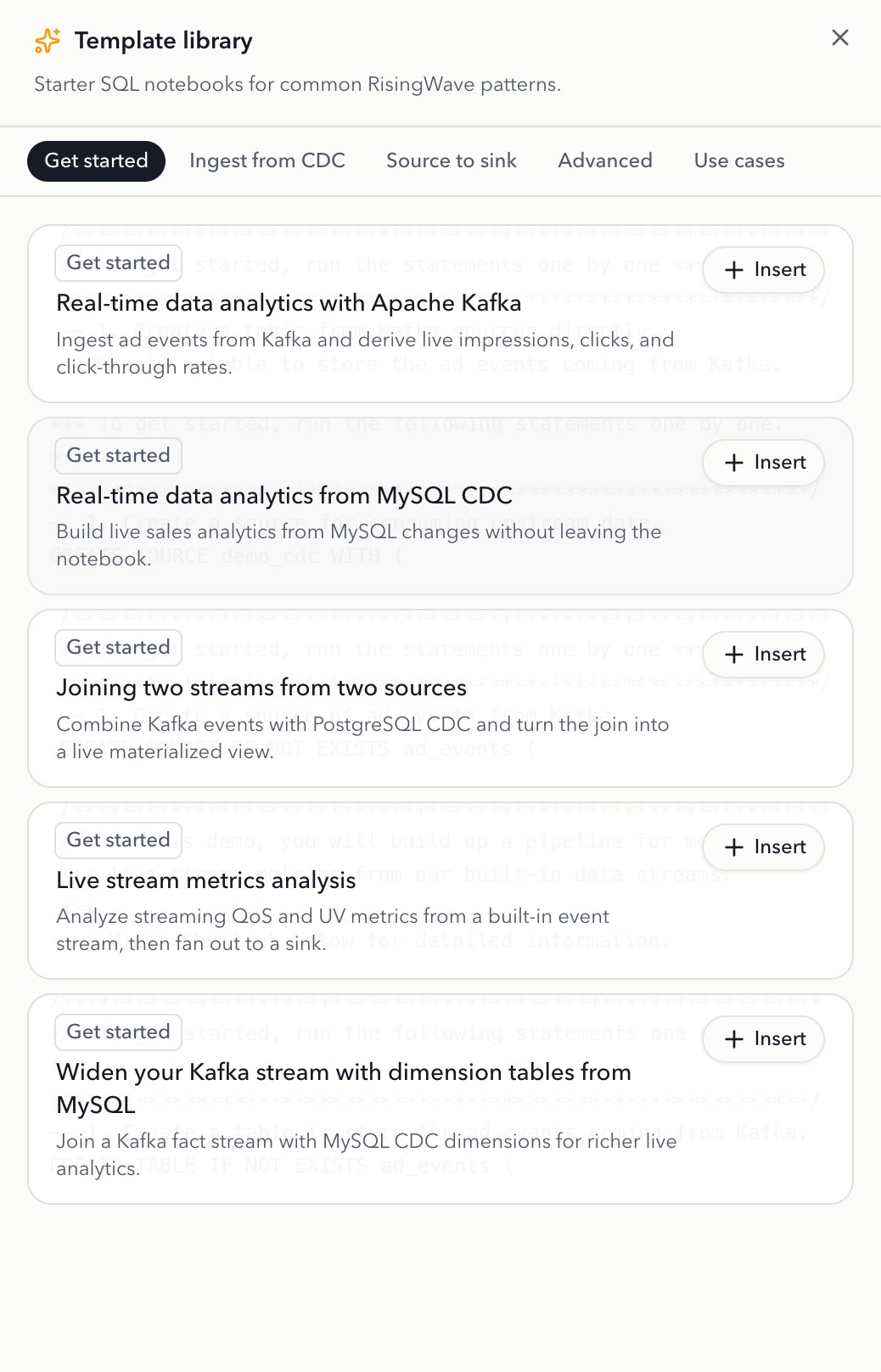
Query results
After a cell runs, the SQL Editor shows the command tag, row count, execution duration, tabular results, and any errors. If a result has tabular data, you can export it as CSV and create inline charts from the result.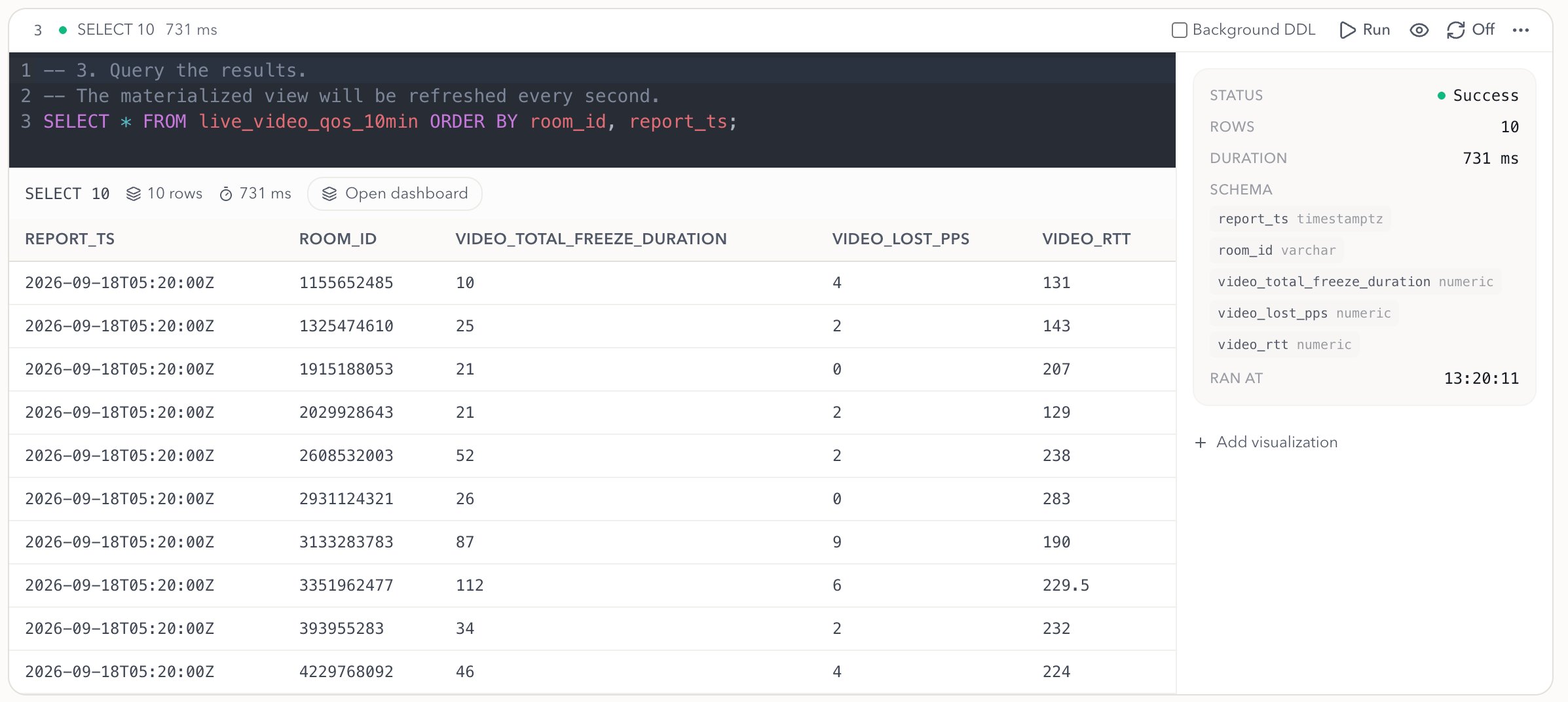
Auto-refresh
For eligible read-only queries, you can set an auto-refresh interval so results stay up to date.Import and export
You can import.rwnb.json and .sql files, export a notebook as .rwnb.json, or export all cells as .sql.
Start developing
Develop with RisingWave Cloud
RisingWave Cloud leverages the superpower of RisingWave, an open-source distributed SQL database specifically designed for stream processing. Start building your real-time applications with RisingWave using the SQL Editor.